
Broader foundation
Young athletes who want a stronger general physical foundation beyond sport practice alone.
Youth athletic development · Black Mountain & greater Asheville
Youth athletic development should do more than make a young athlete tired. Training should help them learn how to move, produce force, absorb force, coordinate their body, build useful strength, and develop confidence across a wide range of physical challenges.
Dakota Hall’s youth coaching uses age-appropriate strength, movement, speed, power, coordination, and conditioning to help young athletes build a broader physical foundation for sport and life.
Who this is for
Young athletes who want a stronger general physical foundation beyond sport practice alone.
Athletes in martial arts, field sports, climbing, running, court sports, or other physically demanding activities.
Youth who benefit from supervised strength-training fundamentals and progressive skill development.
Athletes very active in one sport who could benefit from broader physical preparation.
Adolescents transitioning toward more structured strength and conditioning.
Young people who simply enjoy becoming stronger, faster, more coordinated, and more physically confident.
Training philosophy
Sport practice develops sport-specific skill. Strength and conditioning can complement that practice by developing physical qualities that may not receive enough attention during regular practices, games, classes, or competitions.
Youth training is designed to build a broad base of physical competence. Depending on the athlete’s age, experience, goals, and current abilities, sessions may include strength training, sprint mechanics, jumping and landing, coordination, balance, mobility, change of direction, throwing, carrying, crawling, conditioning, and other age-appropriate challenges.
The goal is not to specialize earlier. The goal is to help the athlete become more adaptable.
Relationship to sport practice
A martial artist becomes better at martial arts by practicing martial arts. A soccer player becomes better at soccer by playing and practicing soccer. Strength and conditioning serves a different role.
The purpose of supplemental training is to help develop the physical tools that support those activities: strength, power, coordination, work capacity, movement options, and confidence under load.
Programming should take the athlete’s existing practices, competitions, school schedule, recovery, and other physical activities into account.
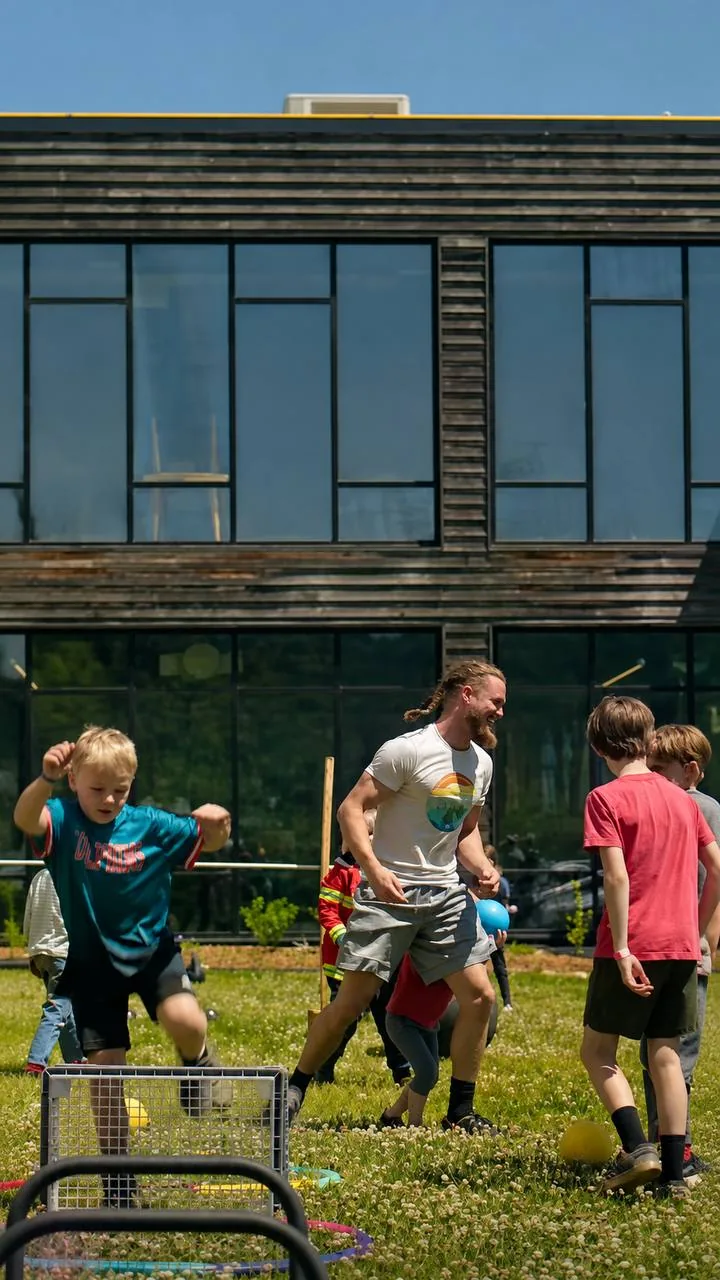
Youth coaching in action
Sessions blend games, coordination tasks, strength skills, and athletic movement so training stays engaging while building useful capacity.

What we train
Fundamental patterns including squatting, hinging, pushing, pulling, carrying, bracing, and appropriately scaled resistance training.
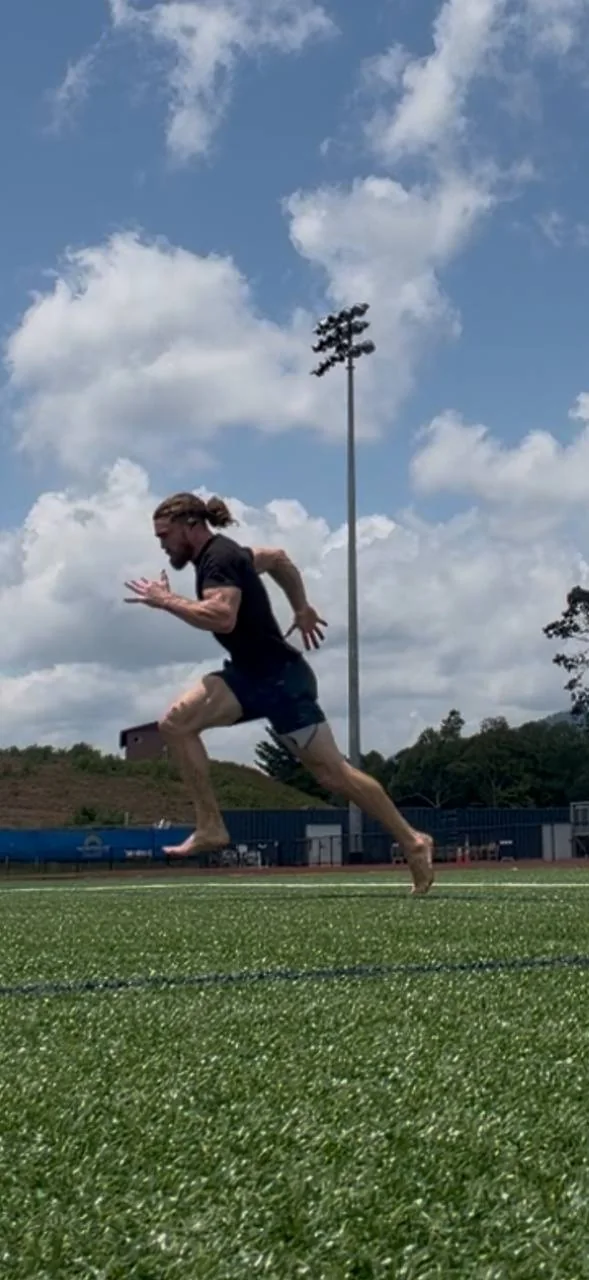
Posture, rhythm, projection, coordination, and efficient exposure to faster running.
Basic jumping skill, landing control, elastic qualities, and confidence absorbing force.
Games, reaction tasks, changes of direction, locomotion, and movement challenges that develop adaptability.
Usable ranges of motion, balance, positional awareness, and control rather than flexibility for its own sake.
Age-appropriate conditioning that supports practice, competition, recovery, and general physical confidence.
How sessions are structured
A younger or less experienced athlete may spend more time learning positions, playing movement games, developing coordination, and building basic strength literacy.
A more experienced adolescent athlete may progress toward more structured strength work, sprinting, jumping, power development, and conditioning.
Sessions should remain technically focused and challenging without turning every workout into a test.
Small-group structure
Four-athlete minimum. Final pricing depends on group size, location, facility or field cost, session duration, travel, frequency, and program length.
Parent & athlete expectations
Parents are encouraged to share relevant scheduling, training-load, injury-history, or medical information that could affect participation.
FAQ
Appropriateness depends on maturity, goals, training environment, and supervision — not a single rigid age cutoff. A parent consultation helps determine fit for the specific athlete.
No. Programming can begin with movement competency, bodyweight exercises, lighter implements, and introductory resistance-training skills.
Properly supervised and appropriately progressed youth resistance training is a legitimate component of athletic development. Training is not risk-free; coaching emphasizes instruction, progression, and supervision to manage demands thoughtfully.
Training can develop physical qualities that support sport participation. Sport performance also depends on skill practice, coaching, experience, maturation, recovery, and the competitive environment. No specific sport outcome is promised.
General training may be modified when appropriate. Where a concern needs clinical evaluation or treatment, Dakota coordinates with or refers to an appropriate licensed professional.
Every athlete develops at a different rate. Coaching is designed to provide thoughtful instruction, appropriate progression, and a strong physical-development process. Specific changes in performance, strength, speed, sport success, injury risk, or other outcomes will vary based on the athlete and cannot be predicted in advance.
Next step
Start with a conversation about the athlete’s sport, training history, goals, schedule, and current needs.